Why Invest in Technical Textile Manufacturing Lines?
With rising global demand for high-performance fabrics across sectors such as healthcare, automotive, military, and sportswear, the technical textile industry is becoming an increasingly attractive field for investors and manufacturers.
As innovation drives new applications and market segments, investing in a technical textile manufacturing lines offers both strategic and financial rewards. However, success depends on understanding the complexities of the technology, market needs, and operational demands. This article outlines the key considerations before purchasing or upgrading your Technical Textile Manufacturing Lines.
The Business Case for Technical Textile Manufacturing Lines Investment
The shift from conventional to functional textiles is no longer a niche trend—it is a global transformation. From antimicrobial hospital gowns to bulletproof vests and filtration membranes, technical textiles are now integral to modern infrastructure, health, and safety. Investing in production capabilities for these textiles means entering a value chain defined not by fashion, but by performance specifications and compliance standards.
Global forecasts project consistent growth in technical textiles, driven by sectors such as personal protective equipment (PPE), geotextiles for construction, smart fabrics with integrated electronics, and eco-friendly composites. As governments and industries place greater emphasis on sustainability and safety, the demand for engineered textile products will only increase. Therefore, investing in a reliable, high-precision production line is a future-proof move—provided it’s executed with a clear technical and market strategy.
Choosing the Right Production Technology When Investing in Technical Textile Manufacturing Lines
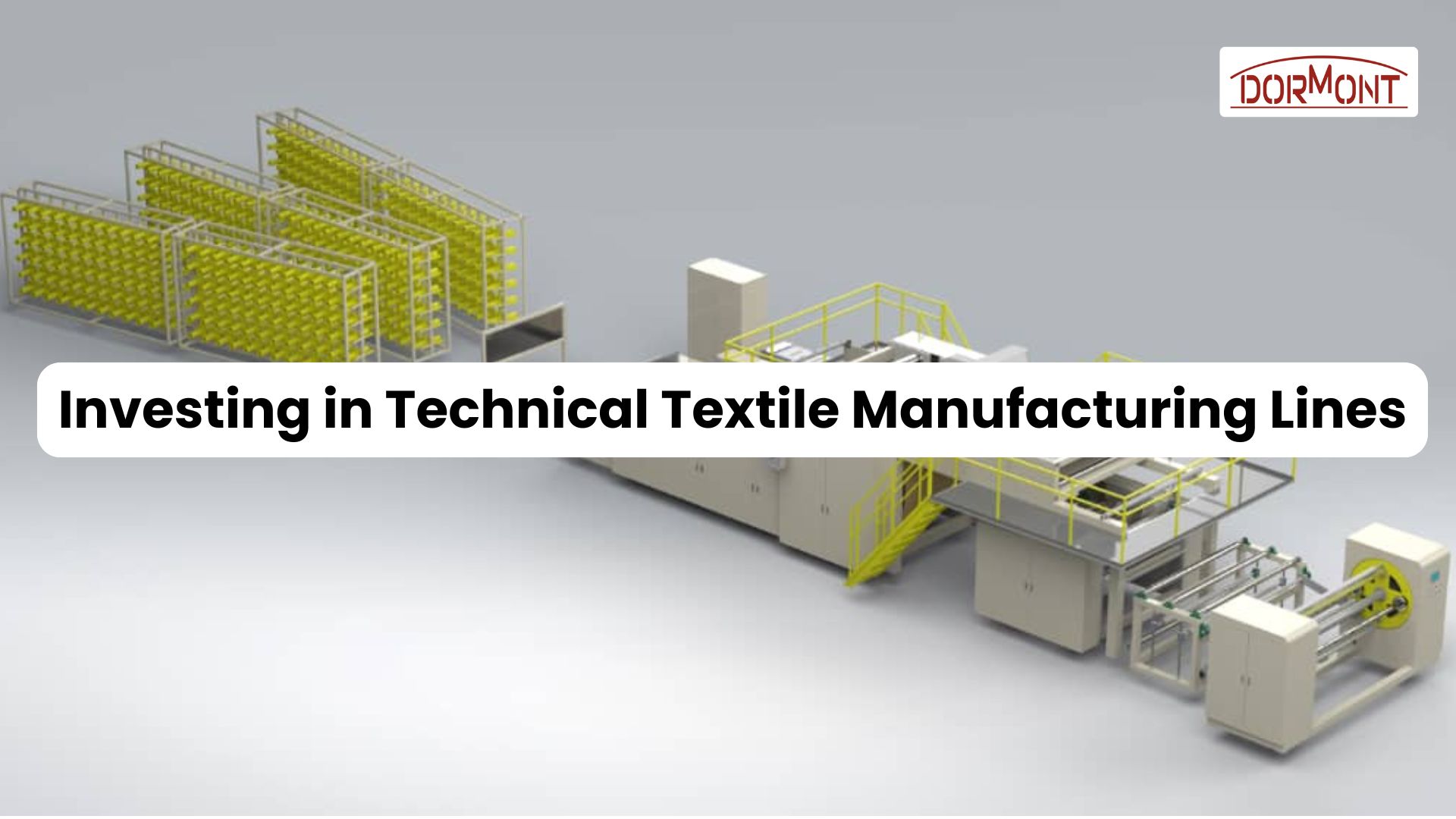
One of the most critical decisions in your investment journey is selecting the appropriate manufacturing technology. Technical textiles are made through various processes including weaving, knitting, needle punching, meltblown and spunbond nonwovens, as well as coating and laminating systems. Each process targets a specific product type and performance requirement.
If you’re planning to produce filtration media, for example, meltblown technology is ideal for its fine fiber structures and excellent particle capture. For industrial protective clothing, a laminating line that integrates PU or ePTFE membranes with abrasion-resistant fabrics might be more appropriate. Investing in flexible machinery that can accommodate multiple material types and finishing treatments is a competitive advantage, especially as client requirements diversify.
Factory Layout, Utility Demands, and Scalability
Beyond the machinery itself, proper factory planning is essential. Technical textile production lines typically require precise environmental controls, including temperature, humidity, and contamination management. Cleanroom standards may apply, especially in medical or electronics applications.
Utility infrastructure—compressed air systems, water treatment, power capacity, and waste management—must be considered during the planning phase. Scalability in Technical Textile Manufacturing Lines is also important. Investors should think not only about initial production goals, but how easily the facility can scale operations or shift production lines in response to new contracts or market shifts.
Operational Expertise and Workforce Requirements
Unlike traditional textile manufacturing, technical textile production demands a higher level of engineering expertise. Operators need to understand the behavior of technical fibers under mechanical and thermal stress, as well as the impact of different coatings and laminates on end-product performance. This may require workforce training, process automation, and the implementation of digital monitoring systems to ensure consistency and compliance.
Additionally, technical textiles often require certification for industry use (e.g., ISO, EN, ASTM). Ensuring compliance through lab testing and documentation is a key component of operations. Investors must be prepared to implement a robust quality management system (QMS) as part of the production ecosystem.
What Can Dormontbiz Do for You?
At Dormontbiz, we help industrial investors and manufacturers navigate the complexities of setting up and scaling Technical Textile Manufacturing Lines. Based in Turkey, we offer a complete portfolio of services including machinery sourcing, project consulting, and full line integration. Whether your focus is on medical nonwovens, defense materials, filtration fabrics, or smart textiles, we tailor solutions to meet your operational and financial goals.
In addition to production technology, Dormontbiz supports strategic Mergers and Acquisitions (M&A) in the textile sector. We provide insights into target evaluation, synergy analysis, and deal execution—ensuring you invest in businesses with strong technical foundations and market potential. From turnkey factory setups to joint ventures and cross-border acquisitions, our team delivers the expertise and network you need to scale intelligently.
When you partner with Dormontbiz, you gain more than a supplier—you gain a long-term strategic ally. Our experience in machinery, market trends, and operational excellence positions us as a premier facilitator of industrial textile expansion. Invest in the future of functional fabrics with confidence, backed by the precision and professionalism of Dormontbiz.