

In today’s dynamic and competitive global economy, Mergers and Acquisitions (M&A) have become essential strategic tools for companies seeking rapid growth, market entry, technological expansion, or operational synergy. From multinational corporations to mid-sized industrial firms, M&A activities are reshaping industries by consolidating resources, accelerating innovation, and optimizing efficiency. For business owners, executives, and investors, understanding the M&A process and its potential benefits—and risks—is critical to making informed strategic decisions. What Are Mergers and Acquisitions? A merger happens when two companies agree to combine their activities and operations, creating a new organization with joint ownership and management of the internal value and supply chains. An acquisition, on the other hand, involves one company purchasing another—either through asset acquisition or by taking control of shares—to integrate it into the buyer’s organization. Both approaches serve similar goals: strategic growth, competitive advantage, or resource consolidation. While the terms are often used interchangeably, the structure and intent can differ significantly. A merger typically reflects a mutual agreement and is more common among similarly sized firms. Acquisitions may be friendly or hostile and are often used by larger firms to absorb smaller, innovative companies or competitors. Why Companies Pursue M&A Businesses pursue M&A for a wide range of reasons, often with overlapping objectives. Some of the most common strategic drivers include: 1. Market Expansion: Acquiring a company in a new geographic region or sector allows immediate market access, bypassing the time and cost of organic growth. 2. Technological Advancement: M&A allows companies to obtain proprietary technologies, patents, or R&D capabilities without developing them from scratch. 3. Synergy and Efficiency: Combining operations can result in cost savings, economies of scale, and streamlined production or logistics networks. 4. Talent Acquisition: In sectors where human capital is a competitive differentiator, acquiring a company is an effective way to secure expert teams. 5. Competitive Elimination: Acquisitions can neutralize competitors by consolidating market share and intellectual property under one roof. The M&A Process: Key Phases Mergers and acquisitions require careful planning and execution. A typical transaction involves the following phases: 1. Strategy and Target Identification The acquirer defines strategic goals—such as entering a new market, diversifying products, or improving margins. Targets are then researched and evaluated for alignment with these goals. 2. Due Diligence A comprehensive audit of the target company is conducted to verify financials, operations, legal status, liabilities, intellectual property, and potential risks. This stage is crucial for making informed decisions and structuring the deal appropriately. 3. Valuation and Deal Structuring Financial models are used to estimate the target’s value based on revenue, EBITDA, assets, and growth potential. Negotiations follow, resulting in the drafting of term sheets and agreements. Deal structure can include cash, stock, debt instruments, or earn-out clauses. 4. Integration Planning Post-deal integration is often the most challenging phase. It involves aligning cultures, systems, HR, IT, and operations to ensure that the combined entity delivers the expected synergies. 5. Execution and Monitoring After the deal closes, performance must be monitored against objectives. This includes tracking KPIs, managing stakeholder expectations, and adjusting the integration roadmap as needed. Risks and Challenges in M&A Despite the strategic potential, M&A transactions carry inherent risks. Overpaying for targets, cultural misalignment, integration failures, or unforeseen liabilities can undermine the success of a deal. Proper planning, realistic synergy assessments, and effective change management are essential to overcoming these obstacles. In cross-border M&A, additional layers of complexity—such as regulatory compliance, currency risk, and cultural differences—must be addressed. This is where experienced advisors add substantial value. What Can Dormontbiz Do for You? At Dormontbiz, we bring a comprehensive, hands-on approach to Mergers and Acquisitions for industrial sectors, both within Turkey and across global markets. We specialize in guiding companies, private investors, and family offices through the entire M&A process—from target scouting to due diligence, negotiation, and post-merger integration. Whether you are a manufacturer seeking vertical integration, a technology company looking to scale, or an investor targeting operational assets, Dormontbiz provides strategic advisory services grounded in real-world industry experience. We assess opportunities not only from a financial standpoint but also from a technical and operational perspective—ensuring that the deal delivers long-term value. Our strong network within the technical textile, machinery, and broader industrial domains gives our clients exclusive access to vetted, often off-market opportunities. We also facilitate divestments, helping business owners prepare their operations for sale and attract suitable strategic or financial buyers. Partner with Dormontbiz for Your Next Strategic Move In an era of rapid change and fierce competition, growth through M&A offers a path to resilience, innovation, and leadership. But successful transactions require more than capital—they demand insight, experience, and execution. Dormontbiz delivers all three. Let us help you navigate the complexities of M&A with confidence, turning strategic vision into operational success.
Investing in Technical Textile Manufacturing Lines
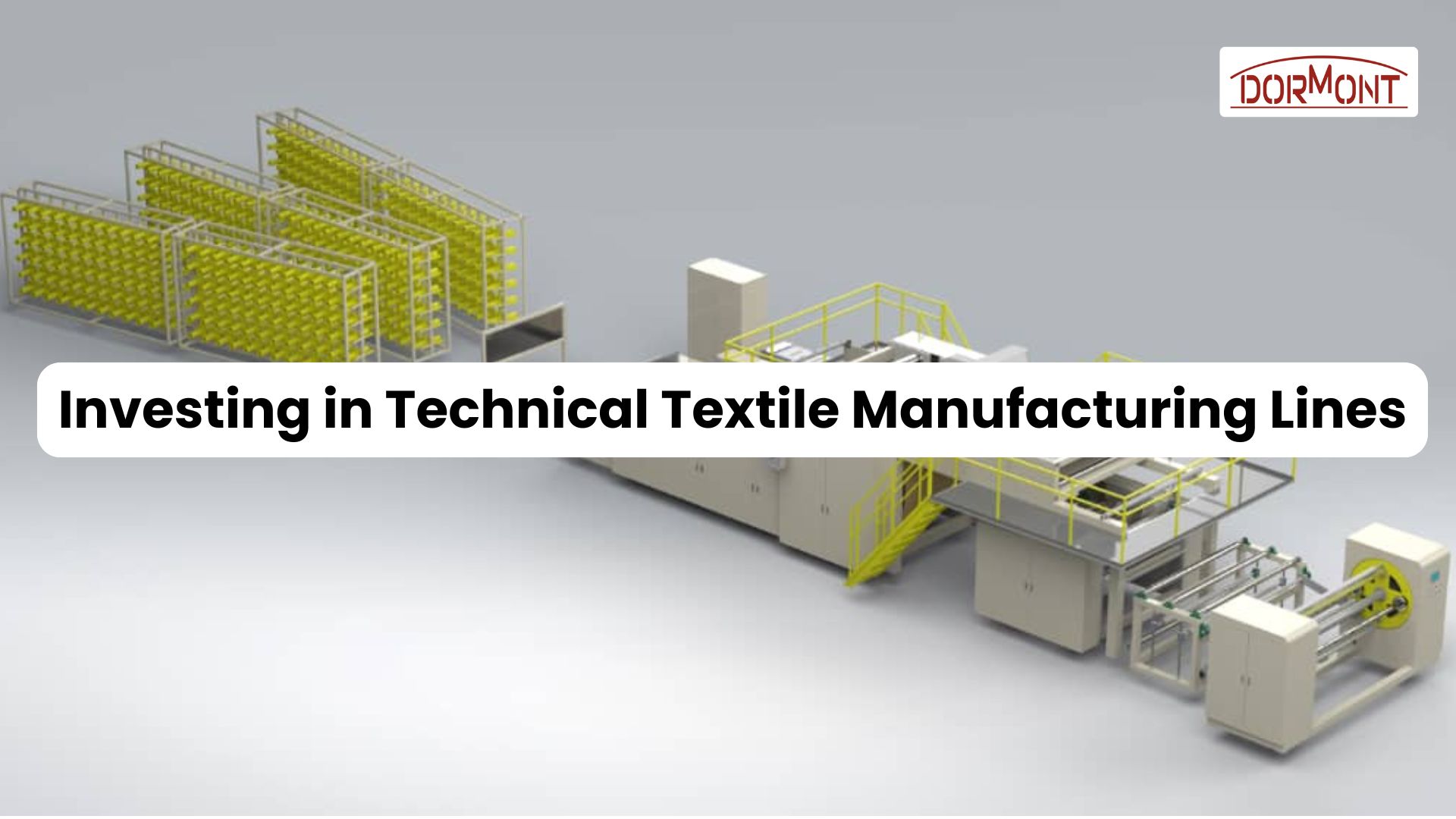
Why Invest in Technical Textile Manufacturing Lines? With rising global demand for high-performance fabrics across sectors such as healthcare, automotive, military, and sportswear, the technical textile industry is becoming an increasingly attractive field for investors and manufacturers. As innovation drives new applications and market segments, investing in a technical textile manufacturing lines offers both strategic and financial rewards. However, success depends on understanding the complexities of the technology, market needs, and operational demands. This article outlines the key considerations before purchasing or upgrading your Technical Textile Manufacturing Lines. The Business Case for Technical Textile Manufacturing Lines Investment The shift from conventional to functional textiles is no longer a niche trend—it is a global transformation. From antimicrobial hospital gowns to bulletproof vests and filtration membranes, technical textiles are now integral to modern infrastructure, health, and safety. Investing in production capabilities for these textiles means entering a value chain defined not by fashion, but by performance specifications and compliance standards. Global forecasts project consistent growth in technical textiles, driven by sectors such as personal protective equipment (PPE), geotextiles for construction, smart fabrics with integrated electronics, and eco-friendly composites. As governments and industries place greater emphasis on sustainability and safety, the demand for engineered textile products will only increase. Therefore, investing in a reliable, high-precision production line is a future-proof move—provided it’s executed with a clear technical and market strategy. Choosing the Right Production Technology When Investing in Technical Textile Manufacturing Lines One of the most critical decisions in your investment journey is selecting the appropriate manufacturing technology. Technical textiles are made through various processes including weaving, knitting, needle punching, meltblown and spunbond nonwovens, as well as coating and laminating systems. Each process targets a specific product type and performance requirement. If you’re planning to produce filtration media, for example, meltblown technology is ideal for its fine fiber structures and excellent particle capture. For industrial protective clothing, a laminating line that integrates PU or ePTFE membranes with abrasion-resistant fabrics might be more appropriate. Investing in flexible machinery that can accommodate multiple material types and finishing treatments is a competitive advantage, especially as client requirements diversify. Factory Layout, Utility Demands, and Scalability Beyond the machinery itself, proper factory planning is essential. Technical textile production lines typically require precise environmental controls, including temperature, humidity, and contamination management. Cleanroom standards may apply, especially in medical or electronics applications. Utility infrastructure—compressed air systems, water treatment, power capacity, and waste management—must be considered during the planning phase. Scalability in Technical Textile Manufacturing Lines is also important. Investors should think not only about initial production goals, but how easily the facility can scale operations or shift production lines in response to new contracts or market shifts. Operational Expertise and Workforce Requirements Unlike traditional textile manufacturing, technical textile production demands a higher level of engineering expertise. Operators need to understand the behavior of technical fibers under mechanical and thermal stress, as well as the impact of different coatings and laminates on end-product performance. This may require workforce training, process automation, and the implementation of digital monitoring systems to ensure consistency and compliance. Additionally, technical textiles often require certification for industry use (e.g., ISO, EN, ASTM). Ensuring compliance through lab testing and documentation is a key component of operations. Investors must be prepared to implement a robust quality management system (QMS) as part of the production ecosystem. What Can Dormontbiz Do for You? At Dormontbiz, we help industrial investors and manufacturers navigate the complexities of setting up and scaling Technical Textile Manufacturing Lines. Based in Turkey, we offer a complete portfolio of services including machinery sourcing, project consulting, and full line integration. Whether your focus is on medical nonwovens, defense materials, filtration fabrics, or smart textiles, we tailor solutions to meet your operational and financial goals. In addition to production technology, Dormontbiz supports strategic Mergers and Acquisitions (M&A) in the textile sector. We provide insights into target evaluation, synergy analysis, and deal execution—ensuring you invest in businesses with strong technical foundations and market potential. From turnkey factory setups to joint ventures and cross-border acquisitions, our team delivers the expertise and network you need to scale intelligently. When you partner with Dormontbiz, you gain more than a supplier—you gain a long-term strategic ally. Our experience in machinery, market trends, and operational excellence positions us as a premier facilitator of industrial textile expansion. Invest in the future of functional fabrics with confidence, backed by the precision and professionalism of Dormontbiz.

PU vs ePTFE Laminates in Technical Textile Sense – Comparison
If we dive into comprehending technical textiles from an industrial buyer standpoint, laminates play a crucial role in defining product performance, especially for applications where breathability, weather resistance, and durability are non-negotiable. Two of the most commonly used laminates in high-performance textiles are Polyurethane (PU) and expanded Polytetrafluoroethylene (ePTFE). Each of these technical textile materials offers a unique balance of features, making them suitable for different industrial and consumer applications. This article provides a detailed, engineering-based comparison of PU vs ePTFE laminates and their role in modern textile systems. What Are PU and ePTFE Laminates PU and ePTFE are both used as thin films bonded to a textile base, enhancing its resistance to water, chemicals, and mechanical stress. The primary difference lies in their structure and how they behave under extreme conditions. PU is a synthetic polymer that can be customized chemically to suit various needs. It is widely used in low- to mid-range performance gear due to its cost-effectiveness and flexible processing. ePTFE, on the other hand, is a microporous version of PTFE (commonly known as Teflon), expanded to create a breathable membrane. Its structure allows vapor to escape while blocking liquids, making it an ideal choice for high-performance and extreme-environment applications. Products like firefighting suits, military uniforms, and extreme weather outdoor gear often rely on ePTFE laminates. Comparative Performance Analysis of PU & ePTFE Laminates Let’s examine the key performance indicators of PU and ePTFE laminates based on industry-relevant metrics: Breathability ePTFE outperforms PU in breathability due to its microporous structure, which enables superior moisture vapor transmission. This makes ePTFE the preferred choice in applications where body heat and moisture need to dissipate effectively, such as in military garments or high-end sportswear. PU, while breathable to a degree, depends heavily on film thickness and chemical formulation, making it less consistent under different operating conditions. Hydrostatic Resistance Both PU and ePTFE offer excellent water resistance when new. However, over time and with repeated laundering or exposure to sunlight and chemicals, PU films tend to degrade, reducing their hydrostatic resistance. ePTFE laminates, in contrast, maintain high levels of water resistance even after prolonged exposure, offering better long-term reliability for mission-critical applications. Thermal and Chemical Stability Thermal stability is another critical parameter, particularly for uniforms and industrial garments exposed to fluctuating temperatures. The ePTFE laminates exhibit significantly better thermal resistance than PU, making them suitable for applications demanding performance at high or sub-zero temperatures. It also has superior chemical resistance, essential in environments where exposure to oils, solvents, or other hazardous substances is likely. Cold Flexibility ePTFE laminates remain flexible and functional at temperatures as low as -40°C. This low-temperature resilience makes them ideal for cold-weather military or expedition gear. PU laminates, however, begin to lose flexibility below -10°C, which can result in cracking or compromised performance in freezing environments. Abrasion Resistance Both materials offer a degree of abrasion resistance, but ePTFE laminates maintain their performance characteristics over time and under mechanical stress. PU can provide decent abrasion protection initially, but its performance typically diminishes faster with wear, especially in high-friction areas such as elbows, knees, or backpack interfaces. Industrial Applications and Strategic Considerations The choice between PU and ePTFE laminates should be guided by the specific application requirements and the operational environment. PU laminates are often used in mid-range rainwear, consumer outdoor products, and industrial uniforms where cost efficiency and basic protection are priorities. The ePTFE material, by contrast, is the type selection in such sectors where failure is not an option—such as defense, aerospace, and advanced medical technical textile applications. Manufacturers must also consider the ease of lamination and bonding. PU can be more versatile in terms of process compatibility and may be easier to bond with certain fabric types. ePTFE, while more demanding in terms of lamination equipment and techniques, delivers unmatched performance once integrated correctly. What Can Dormontbiz Do for You? At Dormontbiz, we provide expert guidance and supply chain solutions for businesses exploring advanced technical textile laminating systems. With years of experience in the Turkish and international markets, we understand the engineering nuances and strategic trade-offs between PU and ePTFE laminates. Whether you are a start-up in protective wear or a global player in medical-grade textiles, we offer machinery, consulting, and merger & acquisition support tailored to your growth strategy. Our equipment lines are optimized for precision lamination, thermal bonding, and post-treatment systems, ensuring that your production meets the highest standards for durability, safety, and performance. Additionally, if you’re looking to enter new markets or acquire cutting-edge capabilities, Dormontbiz supports your M&A objectives with deep technical and financial insight into the textile sector. Choosing the right laminate technology is not just a material decision—it’s a strategic one. Let Dormontbiz help you make the right choice for performance, cost, and competitive edge.

Technical Textile vs Traditional Textile – Industrial Buyers Guide
Understanding the difference technical textile and traditional textile is a critical moment if you are in the position of an industry buyer. While traditional textiles have long been associated with aesthetics and comfort, technical textiles prioritize functionality and performance. This article delves into the fundamental differences between these two categories, exploring their unique characteristics, applications, and the implications for the industrial value chain. Defining Technical Textile and Traditional Textiles Traditional textiles are primarily designed for aesthetic appeal and comfort. They encompass materials used in everyday clothing, home furnishings, and decorative items. The focus here is on visual appeal, texture, and comfort, catering to consumer preferences and fashion trends. On the other hand, technical textiles are crafted to serve niche functional purposes. These textiles are designed to meet stringent performance criteria, such as durability, resistance to environmental factors, and specialized functionalities like flame protection or conductivity. Applications span across industries including automotive, aerospace, healthcare, and construction, where performance and reliability are paramount. Key Differences in Manufacturing and Application The manufacturing processes for technical and traditional textiles differ significantly. Traditional textiles often utilize conventional weaving or knitting techniques, focusing on patterns, colors, and textures. The materials used are typically natural fibers like cotton, wool, or silk, chosen for their comfort and appearance. Technical textile, however, employs advanced manufacturing techniques such as nonwoven processes, lamination, and coating to achieve desired functional properties. Materials used include synthetic fibers like aramid, carbon, and glass fibers, selected for their strength, durability, and resistance to various environmental factors. Applications of traditional textiles are predominantly in the consumer sector, including apparel, upholstery, and home décor. Technical textiles, on the other hand, are integral to industrial applications such as geotextiles for soil stabilization, medical textiles for implants and bandages, and protective clothing for firefighters and military personnel. Performance Characteristics of Technical Textile vs Other Textiles When comparing performance characteristics, technical textile outperforms traditional textiles in several aspects: Durability: Technical textiles are designed to withstand harsh conditions, including extreme temperatures, chemicals, and mechanical stress. Functionality: They offer specialized functions such as water repellency, UV protection, and antimicrobial properties. Customization: Technical textiles can be tailored to meet specific requirements of different industries, ensuring optimal performance. Traditional textiles, while comfortable and aesthetically pleasing, lack the specialized functionalities required for industrial applications. Their performance is adequate for everyday use but falls short in demanding environments unlike technical textile. Market Dynamics and Industrial Implications The demand for technical textiles is on the rise, driven by advancements in technology and the growing need for high-performance materials across various industries. This shift is influencing the industrial value chain, prompting manufacturers to invest in research and development to innovate and meet the evolving requirements. Traditional textile manufacturers are also exploring opportunities to diversify into technical textiles, leveraging their existing infrastructure and expertise. This transition necessitates a strategic approach, including upgrading machinery, acquiring technical know-how, and understanding the regulatory standards specific to technical textile applications. What Can Dormontbiz Do for You? At Dormontbiz, we specialize in facilitating the transition from traditional to technical textile manufacturing. Based in Europe, we offer viable solutions tailored to your business needs: Technical Textile Production Lines: We provide state-of-the-art machinery and equipment designed for the production of various technical textiles, ensuring efficiency and quality. Mergers and Acquisitions: Our expertise in M&A enables us to assist you in identifying strategic partnerships and acquisition opportunities to expand your capabilities. Consultancy Services: We offer expert guidance on market trends, regulatory compliance, and technological advancements to help you make informed decisions. Partner with Dormontbiz to navigate the evolving textile industry landscape and capitalize on the growing opportunities in technical textiles.
What Is Technical Textile and How Does It Work?
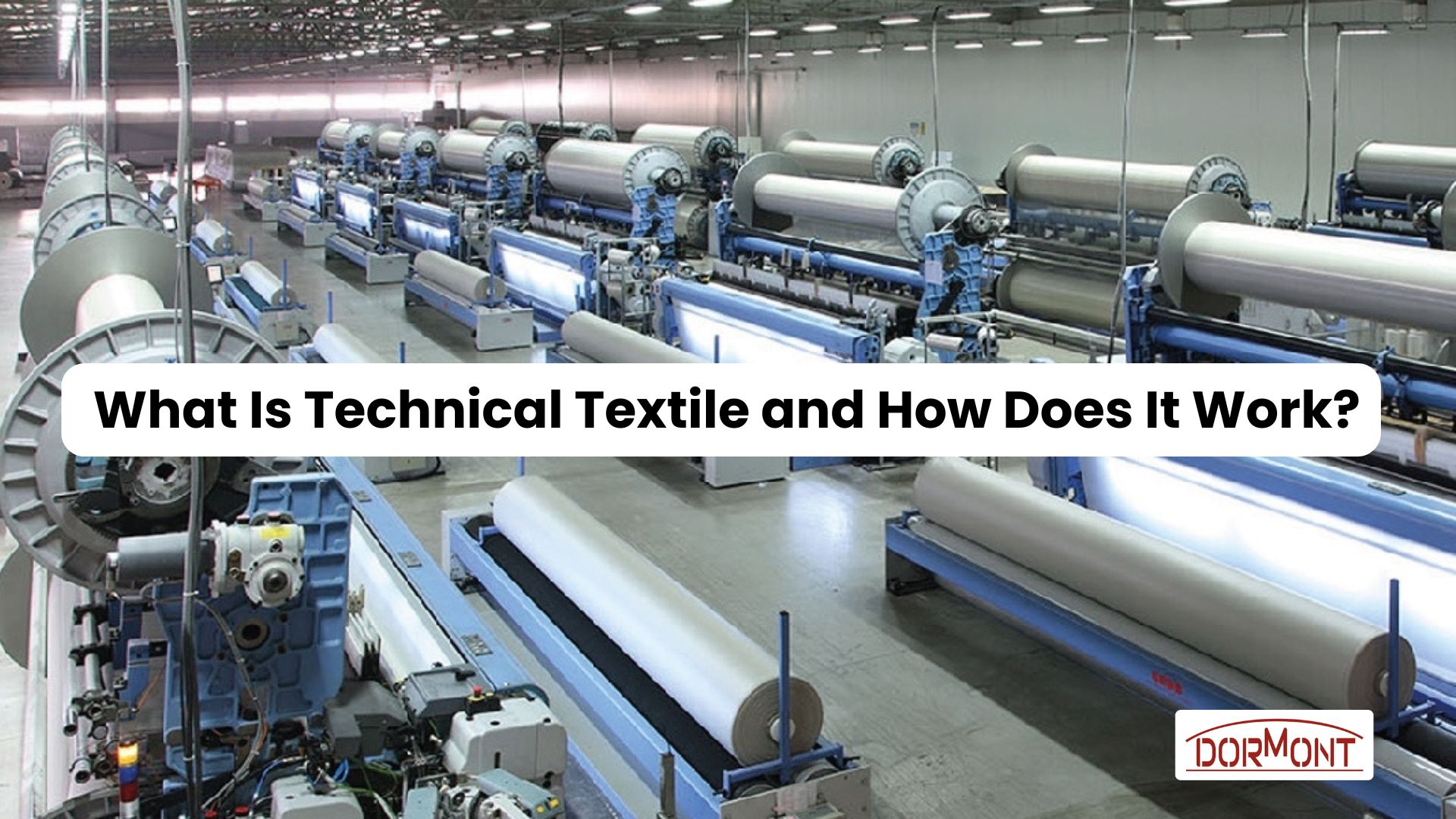
Technical textile is revolutionizing industrial manufacturing with its performance-driven design and specialized applications. Unlike conventional textiles used in clothing and home décor, technical textiles are engineered to perform specific functions under demanding conditions. From aerospace to agriculture, and from healthcare to high-tech sportswear, these advanced materials are reshaping product development, innovation cycles, and market competitiveness. Defining Technical Textiles in the Industrial Context At their core, technical textiles are textile materials manufactured for non-aesthetic purposes, where performance is the key criterion. They are developed to meet exacting specifications regarding strength, elasticity, durability, thermal resistance, chemical stability, and more. These materials are not defined by how they look or feel, but by how they perform under real-world industrial conditions. For example, the fabric used in bulletproof vests is engineered to absorb and disperse the kinetic energy of projectiles. In another context, geotextiles reinforce soil structures in road construction, improving stability and drainage. Each technical textile is customized with functional features to solve engineering problems or enhance product performance. How Technical Textiles Are Made Producing technical textiles involves precision machinery and high-level process control. Manufacturers use various methods, including weaving, knitting, nonwoven bonding, and advanced lamination. The choice of method really depends on the intended end-use of the technical textile fabric. In recent years, nonwoven technologies such as spunbond and meltblown have gained prominence due to their ability to create lightweight, strong, and breathable fabrics ideal for filtration, medical, and hygiene applications. Laminated textiles, where performance films such as polyurethane (PU) or expanded polytetrafluoroethylene (ePTFE) are bonded to the surface, are commonly used for weather protection, chemical resistance, and waterproof-breathable clothing. Each production method can be further enhanced with coating technologies and finishing treatments that impart functionalities such as flame resistance, anti-bacterial properties, UV stability, or conductive capabilities. This flexibility allows technical textiles to be engineered for extreme environments—from sub-zero arctic conditions to corrosive industrial plants. Key Application Areas of Technical Textile The range of industries utilizing technical textiles continues to expand. In the automotive sector, they are used in airbags, seatbelts, acoustic panels, and insulation. In construction, geotextiles and composite membranes provide structural reinforcement and moisture barriers. The healthcare industry relies heavily on medtech textiles for wound dressings, implants, and hospital drapes. Even the defense and aerospace industries demand materials with high thermal stability and mechanical strength to meet military-grade standards. Technical textiles are also enabling innovation in consumer applications. For instance, high-performance athletic wear integrates breathable and moisture-wicking fabrics, while outdoor equipment benefits from water-resistant and tear-proof textiles that can withstand rugged use. Technical Textile vs Traditional Textiles Traditional materials like cotton, wool, and polyester are often chosen based on touch, color, and fashion trends. In contrast, technical textiles are specified based on quantifiable metrics like tensile strength, permeability, resistance to abrasion, and chemical compatibility. Moreover, the lifecycle and maintenance of technical textiles differ substantially. These materials are expected to maintain integrity across repeated washings, exposures, and mechanical stress cycles. Their production also often involves more stringent quality control and regulatory compliance, especially in sectors like medical and protective clothing. What Can Dormontbiz Do for You? Based in Europe, Dormontbiz is a trusted partner in the global technical textile industry. We specialize in supplying cutting-edge technical textile production lines that meet international standards for quality, efficiency, and innovation. Whether you’re a new investor entering the functional textile market or an established manufacturer looking to upgrade your systems, Dormontbiz delivers custom-tailored solutions to fit your production needs. In addition to our equipment and technology offerings, Dormontbiz plays a strategic role in Mergers and Acquisitions (M&A). We help clients identify acquisition targets, facilitate due diligence, and manage integration projects to accelerate growth and diversify product portfolios. Our team combines engineering expertise with financial acumen, ensuring that both the technological and commercial aspects of M&A transactions are seamlessly aligned. As global demand for performance fabrics continues to rise, Dormontbiz empowers textile businesses to adapt, innovate, and lead. With a focus on precision, quality, and long-term partnerships, we stand ready to guide your technical textile journey from concept to commercialization. Whether you’re looking to source the latest textile lamination systems or explore strategic acquisitions in emerging markets, Dormontbiz is your gateway to success in the future of fabric engineering.